
The Eagle Has No Choice
Military Power and the America First Future

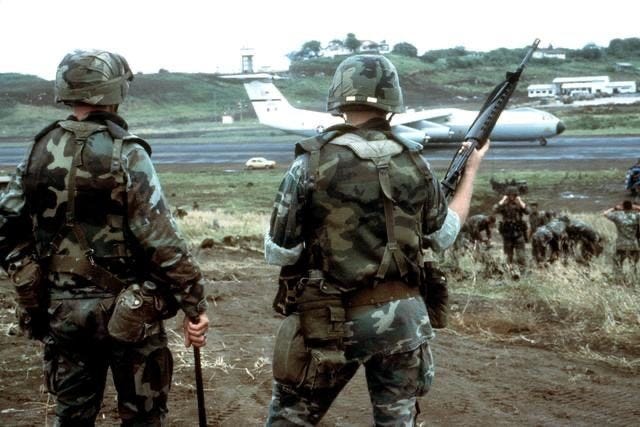
There is a strain of thought that runs through certain corners of the American right, earnest, wounded, and ultimately useless, that believes the cure for a century of foreign policy catastrophe is to pull the eagle’s wings off entirely. Bring the troops home. Shut the bases. Let the world sort itself out. America, they say, should be a republic, not an empire. A city on a hill, not a garrison on every hill.
It sounds principled. It sounds like something a Founder might have said.
The men and women who hold this view have watched their country bleed for thirty years in deserts that had nothing to do with them, spend trillions of dollars propping up governments that despised them, and bury friends who died for objectives that were never explained and never achieved. Of course they want out. Of course the word “intervention” makes their skin crawl.
A nation that flinches cannot survive the twenty-first century.
The Trauma Response Has No Place at the War Table
When a man is badly burned, he becomes afraid of fire. This is understandable. Human, even. Left uncorrected, though, it becomes a disability and man who cannot approach a stove cannot feed himself.
The isolationist right has been badly burned. Iraq. Afghanistan. Libya. Syria. A generation of young Americans sent into the grinder for objectives that had nothing to do with national security and everything to do with the ideological projects of a foreign policy establishment that was never held accountable for a single catastrophe it engineered. The anger is definitely legitimate. The diagnosis, that these wars were wrong, that they were fought in the interests of parties other than the American people, that the architects of these adventures should have faced consequences they never faced, is correct in every particular.
The problem was that America’s power was exercised by people who did not give a single thought to American interests when they exercised it. The solution to that problem is not powerlessness.
An America that dismantles its military, withdraws from every forward position, closes its bases, and retreats behind its oceans does not become safe.
China does not become less ambitious because America becomes less present.
Russia does not become less aggressive.
They expand into the space. They always have. They always will.
Let us be honest about the last fifty years, because the isolationist is owed that honesty before we explain why his prescription is still wrong.
Vietnam was a strategic miscalculation prosecuted through the systematic deception of the American public, fought at the cost of fifty-eight thousand American lives for objectives that were never achievable by the means employed, and concluded in defeat. The men who sent those boys to die faced no consequences. The lesson drawn by the political class was the need for better public relations.
The Gulf War was perhaps the last American military engagement with a coherent strategic rationale, the defense of a critical energy corridor and the demonstration that territorial conquest between states would not be permitted. Even there, the objectives were promptly abandoned the moment they became inconvenient, leaving a wounded Iraq to fester for a decade.
The post-9/11 wars were a generational catastrophe. Afghanistan consumed twenty years, two trillion dollars, and the lives of over two thousand American service members, and ended with the Taliban in control of the same country they governed on September 10, 2001. Iraq was built on manufactured intelligence, prosecuted on the basis of theories that had no relationship to the actual culture and politics of the region, and its aftermath produced ISIS, Iranian regional dominance, and a Shia crescent running from Tehran to the Mediterranean, the precise geopolitical outcome that the architects of the war claimed to be preventing. Libya was reduced to a slave market. Syria became a proxy killing field. In every case, the question of what any of this had to do with the security and prosperity of the American people was not seriously asked, because the people asking the questions and the people making the decisions were operating from an entirely different set of priorities.
The neoconservative project, liberal democracy promotion, humanitarian intervention, the reshaping of the Middle East as a precondition for Israeli regional security, the use of American military power as a tool of ideological transformation, was never an American project. It wore American uniforms and spent American money and buried American boys, but its logic was alien to anything that could honestly be called an America First foreign policy. A class of people whose primary loyalty was to an abstraction, the “liberal international order,” colonized American foreign policy, and their secondary loyalty, in the Middle East theater specifically, was to a foreign state.
All of this is true. All of it should make Americans furious. None of it makes withdrawal the answer.
Replace the logic. Replace the objectives. Replace the class of people who decide how American power is used. Keep the power.
The Hemisphere Belongs to Us
The first principle of a genuinely America First foreign policy is one that used to be uncontroversial: the Western Hemisphere is the American sphere of influence, and no hostile foreign power will be permitted to establish a meaningful presence within it.
Every great power in history has operated by the same logic, applied to whatever territory providence gave them. The Monroe Doctrine was the declaration of a security perimeter and the announcement that the Americas were not available as a playground for European rivalries. Strategic clarity of a kind that American foreign policy has almost entirely lost.
That clarity needs to be recovered and radicalized.
Today, China is building port infrastructure throughout Latin America. Chinese telecommunications equipment is woven into the networks of a dozen countries in our neighborhood. Fentanyl precursors flow from Chinese chemical manufacturers to Mexican cartels and from the cartels into American communities, killing a hundred thousand Americans per year. The Chinese Communist Party has made a deliberate, sustained, generational investment in establishing economic and political leverage throughout the Western Hemisphere.
This is a national security emergency. Washington is treating it like a trade dispute.
An America First foreign policy recognizes that our hemisphere is our strategic depth, our resource base, our defensive perimeter. We need to make clear, through diplomacy first, through economic pressure where necessary, through the credible threat of force where required, that hostile great power competition will not be conducted in our backyard. We need to rebuild the relationships with our actual neighbors that a generation of incompetent foreign policy has degraded. We need to integrate the economies and security architectures of the Americas in ways that serve American interests while providing genuine development and stability to nations that have legitimate grievances with the way the United States has historically treated them.
This is the foreign policy of primacy, focused, regionally appropriate, and honest about what it is.
Allies as Instruments
The second principle is a rethinking of what alliances are for.
America currently maintains a network of alliances, basing agreements, and security guarantees that were built in the aftermath of World War II for conditions that no longer exist. NATO was designed to contain Soviet expansion into Western Europe. The Soviet Union does not exist. Japan and South Korea were protected because they were rebuilding from destruction and were incapable of defending themselves. Japan has the third-largest economy in the world. South Korea has one of the most capable militaries in Asia.
The current alliance structure functions less like a network of partners than a network of dependents, nations that have offloaded their security costs onto the American taxpayer and used the resulting savings to build welfare states and trade surpluses at American expense. They are not contributing to American security. America is subsidizing theirs, at cost to itself, because no one in Washington has been willing to have the honest conversation about what alliances should require.
Allies are not charity cases. They are instruments of American power projection in regions where it would be logistically and politically prohibitive for American forces to operate directly. A fully armed, capable Japan is America’s forward presence in East Asia. A rebuilt European defense architecture is America’s containment perimeter in the North Atlantic.
Think of it in anatomical terms. American power is the central nervous system. Allies are the fingers and toes, extending reach, providing sensation, enabling grip in places the body itself cannot easily go. But fingers and toes do not set the direction of travel. They do not determine what the hand grasps. They execute. They extend. They are useful because they are capable and responsive.
This requires allies to actually build and maintain capable militaries. Honest burden-sharing agreements with defined obligations and defined consequences for non-compliance. America must stop treating allies as children who must be protected from the consequences of their own choices and start treating them as partners who are expected to carry weight.
It also requires America to stop letting allies, any allies, dictate the objectives of American foreign policy. The relationship in which a small, wealthy, nuclear-armed state in the Middle East effectively controls American military engagement in the most volatile region on earth describes a broken hierarchy. The tail is wagging the dog, and the dog has been paying for it in blood and treasure for thirty years.
America can have a working relationship with Israel. America can share intelligence, conduct joint exercises, maintain diplomatic and economic ties. What cannot continue, for any nation serious about its own sovereignty, is allowing another country’s security objectives to function as the default settings of American foreign policy. American policy in the Middle East should serve American interests: stable energy markets, counterterrorism cooperation, prevention of nuclear proliferation, and the containment of powers that directly threaten American citizens and American infrastructure. Where those objectives overlap with Israeli interests, cooperation makes sense. Where they diverge, America acts for Americans. This is not hostility. This is what sovereignty looks like when a country actually means it.
The New Containment
The concept that guided American foreign policy through its most strategically coherent period was containment. George Kennan’s insight, that the Soviet Union could not be rolled back by direct military confrontation but could be held in place, denied expansion, and ultimately exhausted through sustained strategic pressure, gave American policy a logic that it had previously lacked and has largely lacked since.
Containment was the patient, disciplined application of American power to a specific strategic objective: preventing the expansion of a hostile system until that system’s internal contradictions consumed it. It required a strong military, not to fight a global war, but to make the cost of aggression prohibitive. It required a network of alliances, as forward pressure points. It required economic tools, intelligence capabilities, information operations, and the willingness to apply all of them with strategic patience over decades.
The successor to containment should apply the same logic to the conditions of the twenty-first century. The threat is a constellation of antagonistic foreign influences, Chinese economic and political penetration, Russian destabilization operations, Iranian regional aggression, the drug and human trafficking networks that serve as the logistics infrastructure of organized crime and cartel governance across the hemisphere, that collectively degrade American security, corrupt American institutions, and extract wealth from the American people.
New containment means making Chinese economic penetration of the hemisphere unprofitable. It means building the infrastructure and relationships that offer alternatives to Chinese investment. It means using American financial power, the most formidable instrument of statecraft ever assembled, to impose costs on Chinese behavior that make the current strategy untenable. It means rebuilding American manufacturing capacity so that the dependency relationships China exploits cannot be sustained.
New containment of Russia means ensuring that European allies are capable of deterring Russian aggression without requiring American blood. It means removing the energy leverage that Russia has used for a generation to coerce European governments. It means supporting, at arm’s length and with American interests as the explicit justification, the independence and sovereignty of states that serve as buffers between Russian ambition and the stability of the broader European order.
New containment of Iranian influence means pursuing an American Gulf policy, not an Israeli Gulf policy, not a Saudi Gulf policy, but an American Gulf policy, that keeps the Strait of Hormuz open, prevents Iranian nuclear weaponization, and reduces the economic leverage that Iranian proxies exercise over governments across the region. Military force remains on the table when American interests are directly threatened, and so does restraint when they are not.
identify what actually threatens American security and prosperity, apply American power against it in proportion to the threat, and maintain the discipline to distinguish between what is an American problem and what is someone else’s problem being marketed to us as our own.
Why the Military Must Be Strong
None of this works without a military that can back it up.
Diplomacy is the art of making other parties believe that cooperation with you is preferable to confrontation. That belief requires that confrontation be a credible option, and credibility requires capability. A military that has been hollowed out, that cannot project power at distance, that lacks the logistics to sustain operations, that has been consumed by social engineering projects instead of warfighting excellence, stops being a deterrent. It becomes an invitation.
America’s military has been both overused and underfunded for the purposes that actually matter. Overused in theaters that served no strategic American interest, wearing down equipment and burning out the professional force in counterinsurgency campaigns that were never winnable. Underfunded for the kind of peer-competitor deterrence that the current environment requires, long-range strike capability, naval power capable of denying Chinese maritime aggression in the Pacific, hypersonic weapons development, space and cyber capabilities that are increasingly the decisive domains of modern conflict.
An America First military posture inverts these priorities. Fewer deployments to places that don’t matter. Massive investment in the capabilities that deter the powers that do.
This also means rebuilding the defense industrial base. A military’s credibility is ultimately a function of the industrial capacity behind it. America’s capacity to produce the weapons systems, munitions, and platforms that modern warfare requires has been catastrophically degraded by decades of offshoring and consolidation. Rebuilding that capacity is an economic issue, an employment issue, a national sovereignty issue. The strong military is the precondition for everything else on this list. Without it, every other element of the strategy is wish fulfillment.
The choice before the American right is between an American foreign policy that serves American interests, executed with the full power of the most capable military and economic force in human history, and a continuation of the bipartisan consensus that has spent that power on behalf of everyone but the American people.
The isolationist’s answer is to put down the weapon. The America First answer is to take it back and aim it correctly.
The next fifty years of American foreign policy should be organized around three propositions.
First: the Western Hemisphere belongs to the American sphere and hostile foreign influence within it will be contested and ultimately expelled.
Second: American alliances exist to serve American strategic interests, and allies that do not carry their weight will no longer be carried. Third: the instruments of containment, military deterrence, economic pressure, intelligence operations, alliance management, will be directed at the powers and forces that actually threaten American security, not at the projects of foreign lobbies and ideological factions that have no accountability to the American voter.